
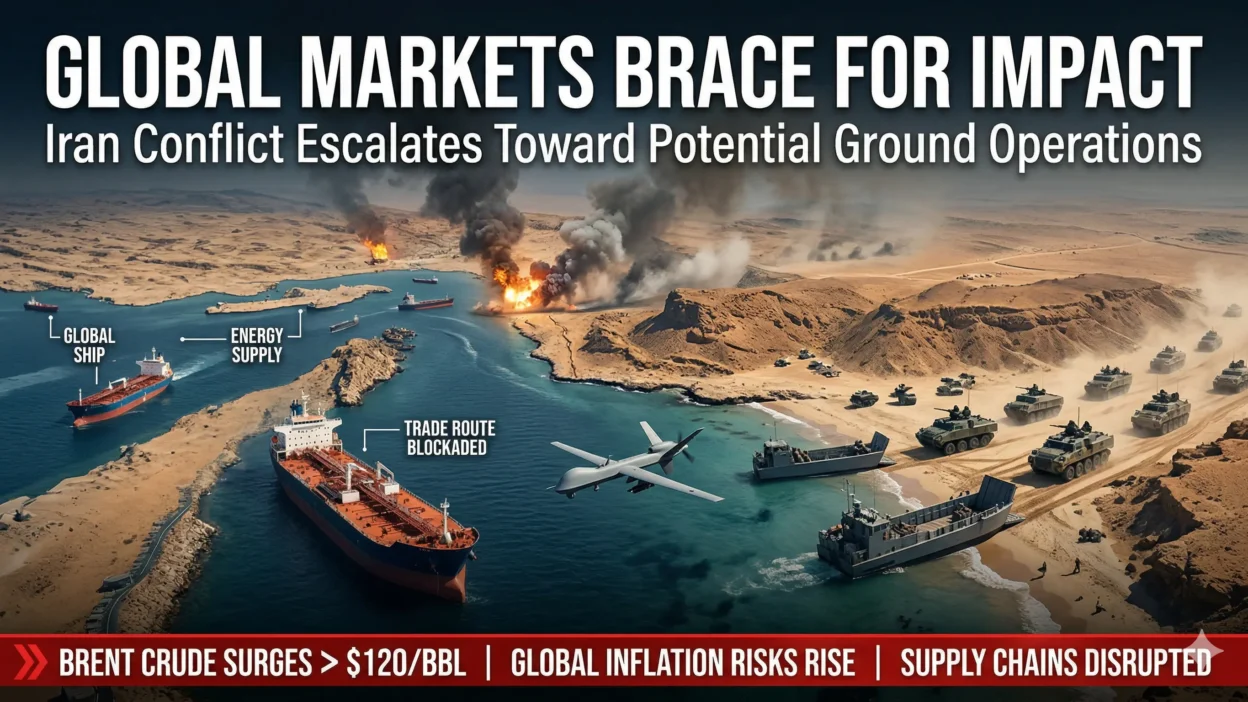
The global economy is facing intensifying pressures as the US-Israel conflict with Iran drags into its second month. With the Pentagon reportedly drafting plans for ground operations and vital trade routes choked off, international markets are bracing for a highly volatile and dangerous new phase of the war.
Since the outbreak of hostilities in late February 2026, the effective closure of the Strait of Hormuz has triggered a worldwide energy supply shock. The strait is a crucial maritime artery responsible for approximately 20% of the world’s seaborne crude oil and liquefied natural gas (LNG).
The economic fallout has been immediate and severe. Brent crude oil prices have surged past $120 per barrel, and Asian LNG spot prices have skyrocketed by more than 140%. The ripple effects are extending far beyond the energy sector; soaring freight costs and heavily repriced war-risk insurance premiums are actively disrupting global supply chains for everything from agriculture and fertilizers to semiconductor manufacturing. Economists are warning that these asymmetrical shocks could reignite global inflation and heighten the risk of a recession, heavily impacting import-dependent economies in Asia and Europe.
The conflict expanded further this weekend after Yemen’s Iran-aligned Houthi forces officially entered the war, claiming responsibility for a barrage of ballistic and cruise missiles fired at Israeli military sites. Simultaneously, explosions were reported in northern Tehran, while Iran claimed it launched retaliatory drone and missile strikes on industrial facilities in the United Arab Emirates and Bahrain.
Adding to market anxieties, recent reports indicate that the US Pentagon is actively preparing contingency plans for weeks of limited-duration ground operations inside Iran. These proposed operations would reportedly focus on raids by special forces and conventional troops targeting coastal defense sites and critical energy hubs near the Strait of Hormuz, such as Kharg Island.
Despite the escalating situation, US officials maintain that the military campaign, internally dubbed “Operation Epic Fury,” is proceeding efficiently. Earlier this week, US Secretary of State Marco Rubio told reporters that Washington could meet all its objectives without a massive ground invasion, stating that the military operations are expected to conclude in “weeks, not months.”
Additionally, White House Press Secretary Karoline Leavitt noted that the US military is “ahead of schedule” in degrading Iran’s missile capabilities. However, it has been confirmed that US President Donald Trump has not yet authorized the deployment of ground troops into Iranian territory.
Despite recent diplomatic efforts—including a 15-point ceasefire proposal that was officially rejected by Iran—the conflict shows no signs of an immediate off-ramp. As the threat of targeted ground operations looms and supply chain disruptions compound, investors, businesses, and governments worldwide remain on high alert, preparing for prolonged geopolitical instability and deepening global economic pain.
Would you like me to gather more specific information on how this crisis is impacting a particular sector, such as global aviation or the technology supply chain?